

Digital Marketing Guide
The internet has transformed the way businesses communicate with customers, promote products, and build lasting relationships. Whether someone is searching for information, shopping online, watching videos, or browsing social media, businesses have countless opportunities to reach potential customers through Digital Marketing.
Unlike traditional advertising, Digital Marketing allows organizations to connect with highly targeted audiences, measure campaign performance in real time, and continuously improve their strategies based on data. From startups and local businesses to global brands, nearly every organization relies on Digital Marketing to increase visibility, generate leads, and drive sales.
This comprehensive guide explains everything you need to know about Digital Marketing, from the basic concepts to advanced strategies, making it suitable for students, entrepreneurs, freelancers, business owners, and marketing professionals.
What is Digital Marketing?


6
Digital Marketing is the process of promoting products, services, or brands using digital channels such as search engines, websites, social media platforms, email, mobile applications, and online advertising.
Instead of relying solely on newspapers, television, or billboards, Digital Marketing enables businesses to communicate directly with customers through the internet. It combines creativity, technology, data analysis, and strategic planning to attract, engage, and convert audiences into loyal customers.
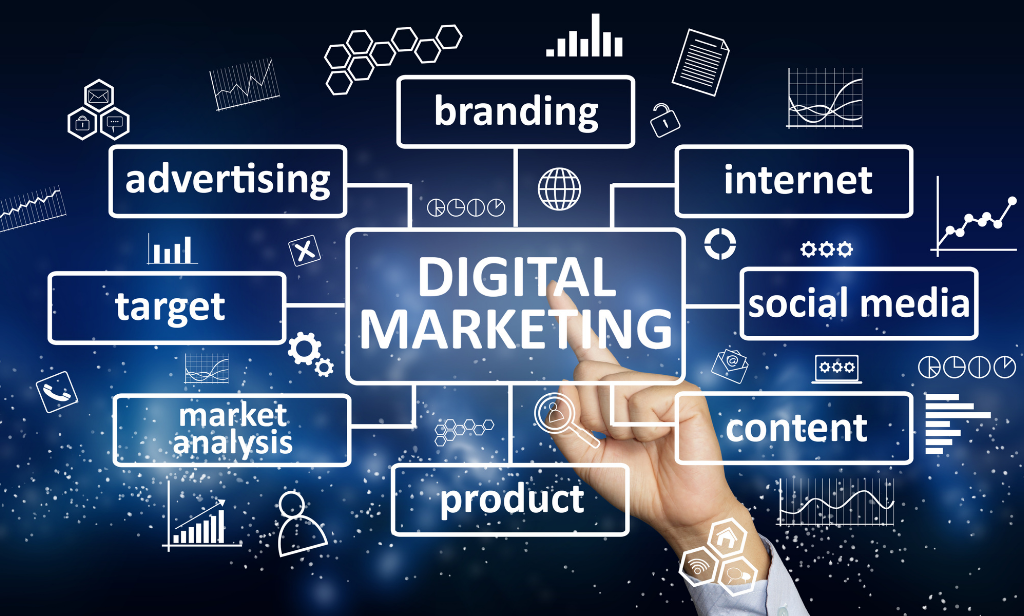
A successful Digital Marketing strategy often includes multiple channels working together to deliver consistent messaging and measurable results.
A Brief History of Digital Marketing


7
The evolution of Digital Marketing has closely followed the growth of the internet and digital technology.
1990s – The Beginning
The early internet introduced websites and search engines, allowing businesses to establish an online presence.
Mid-1990s
Banner advertisements became one of the first forms of online advertising.
Late 1990s
Search engines improved, making it easier for users to discover websites through keywords.
Early 2000s
Email campaigns, search engine optimization, and pay-per-click advertising became important parts of Digital Marketing.
2010–2020
Social media platforms, smartphones, video content, and influencer marketing transformed how brands interacted with customers.
2020–2026
Artificial intelligence, automation, personalization, voice search, and data-driven decision-making have become major trends shaping modern Digital Marketing.
Traditional Marketing vs Digital Marketing
Businesses today often use a combination of traditional and online methods. Understanding the differences helps organizations choose the right strategy.
| Traditional Marketing | Digital Marketing |
|---|---|
| Newspapers | Search Engines |
| Television | Social Media |
| Radio | Websites |
| Billboards | Email Campaigns |
| Flyers | Mobile Apps |
| Limited targeting | Precise audience targeting |
| Difficult to measure | Real-time analytics |
| Higher cost | Flexible budgets |
| One-way communication | Interactive engagement |
The biggest advantage of Digital Marketing is the ability to measure results accurately and optimize campaigns quickly.
Why Digital Marketing Matters
Modern consumers spend a significant amount of time online. Businesses that establish a strong digital presence can reach customers whenever they search for information, compare products, or make purchasing decisions.
Some key reasons why Digital Marketing is essential include:
- Building brand awareness
- Reaching global audiences
- Generating qualified leads
- Increasing online sales
- Improving customer relationships
- Supporting business growth
- Measuring campaign performance
- Enhancing customer engagement
- Reducing advertising waste
- Competing effectively in crowded markets
As technology continues to evolve, Digital Marketing remains one of the most valuable investments for organizations of all sizes.
How Digital Marketing Works


8
A successful Digital Marketing campaign follows a structured process designed to attract visitors and convert them into customers.
Step 1 – Understand the Audience
Research customer needs, interests, and online behavior.
Step 2 – Create Valuable Content
Develop useful articles, videos, graphics, or advertisements.
Step 3 – Promote Through Multiple Channels
Distribute content through search engines, social media, email, and paid campaigns.
Step 4 – Generate Traffic
Encourage potential customers to visit websites or landing pages.
Step 5 – Convert Visitors
Use compelling offers, forms, or calls-to-action to generate leads or sales.
Step 6 – Measure Performance
Analyze campaign data to identify opportunities for improvement.
Step 7 – Optimize Campaigns
Adjust strategies based on performance metrics and customer feedback.
Major Types of Digital Marketing


6
A comprehensive Digital Marketing strategy combines multiple techniques to reach audiences across different platforms.
Search Engine Optimization (SEO)
Improving website visibility in search engine results through high-quality content, technical optimization, and relevant keywords.
Content Marketing
Creating valuable articles, videos, guides, and resources that educate and engage audiences.
Social Media Marketing
Promoting brands and interacting with customers on platforms such as Facebook, Instagram, LinkedIn, X, Pinterest, and YouTube.
Pay-Per-Click (PPC) Advertising
Running paid campaigns where advertisers pay only when users click on advertisements.
Email Marketing
Sending personalized emails to nurture leads, build relationships, and encourage repeat purchases.
Affiliate Marketing
Working with partners who promote products in exchange for commissions.
Influencer Marketing
Collaborating with trusted creators to increase brand awareness and credibility.
Mobile Marketing
Reaching audiences through mobile-friendly websites, applications, SMS campaigns, and mobile advertising.
Digital Marketing Channels
Businesses can communicate with customers through many online platforms.
Common Digital Marketing channels include:
- Websites
- Search engines
- Blogs
- Social media platforms
- Mobile applications
- Video platforms
- Online marketplaces
- Podcasts
- Display advertising networks
- Community forums
- Messaging platforms
Using multiple channels helps businesses reach audiences at different stages of the buying journey.
Understanding the Customer Journey
Every customer goes through several stages before making a purchase.
Awareness
The customer first discovers a brand through Digital Marketing efforts.
Interest
The customer begins researching products or services.
Consideration
Different options are compared based on quality, price, and trust.
Purchase
The customer completes a transaction.
Retention
Businesses continue providing value to encourage repeat purchases.
Advocacy
Satisfied customers recommend the brand to others through reviews and referrals.
Understanding this journey allows businesses to create more effective Digital Marketing campaigns.
The Marketing Funnel


5
A marketing funnel illustrates how potential customers move toward becoming loyal buyers.
Top of Funnel (TOFU)
Create awareness through blogs, videos, search engines, and social media.
Middle of Funnel (MOFU)
Build trust using educational content, webinars, case studies, and email campaigns.
Bottom of Funnel (BOFU)
Encourage conversions through product demonstrations, testimonials, limited-time offers, and personalized communication.
B2B vs B2C Digital Marketing
Different audiences require different strategies.
B2B (Business to Business)
- Longer buying cycles
- Relationship-focused
- Educational content
- LinkedIn marketing
- Industry events
- Detailed decision-making
B2C (Business to Consumer)
- Faster decisions
- Emotional messaging
- Social media campaigns
- Product promotions
- Influencer partnerships
- Personalized experiences
Both approaches rely on strong Digital Marketing, but the messaging and customer journey often differ.
Essential Digital Marketing Terminology
Understanding common terms helps beginners build a solid foundation.
SEO
Improving visibility in search engine results.
PPC
Paid advertisements where businesses pay per click.
CTR
Percentage of users who click on a link or advertisement.
Conversion
A desired action such as a purchase or form submission.
Lead
A potential customer interested in a product or service.
Landing Page
A focused webpage designed to encourage conversions.
Bounce Rate
The percentage of visitors who leave without interacting further.
ROI
The return generated from marketing investments.
Common Myths About Digital Marketing
Many misconceptions prevent businesses from achieving better results.
Myth 1
Only large companies benefit from Digital Marketing.
Reality: Small businesses can compete effectively with the right strategy.
Myth 2
Results appear instantly.
Reality: Sustainable growth often requires consistent effort over time.
Myth 3
Social media alone is enough.
Reality: Successful campaigns usually combine multiple channels.
Myth 4
More traffic always means more sales.
Reality: Relevant traffic and strong conversion strategies matter more than visitor numbers.
Career Opportunities
The growing demand for online business has created many career paths.
Popular roles include:
- SEO Specialist
- Content Marketer
- Social Media Manager
- PPC Specialist
- Email Marketing Specialist
- Marketing Analyst
- Brand Strategist
- Affiliate Manager
- Marketing Automation Specialist
- Digital Marketing Manager
- Freelance Consultant
- Marketing Agency Professional
These careers continue to expand as organizations invest more in online growth.
Future Scope
The future of Digital Marketing is driven by innovation. Artificial intelligence, automation, personalization, voice search, augmented reality, predictive analytics, and privacy-focused technologies are reshaping how businesses connect with audiences.
Companies that embrace data-driven decision-making and continuously adapt to changing consumer behavior will be better positioned for long-term success. Learning Digital Marketing today provides valuable skills that remain relevant across industries and business sizes.
Interesting Facts
- Billions of people use the internet every day, creating enormous opportunities for businesses.
- Search engines process billions of searches daily, making SEO an important traffic source.
- Mobile devices account for a significant share of online browsing worldwide.
- Personalized campaigns often perform better than generic messaging.
- Video content has become one of the fastest-growing formats in Digital Marketing.
- Data and analytics allow marketers to improve campaigns with measurable insights.
- Businesses of every size, from startups to multinational companies, rely on Digital Marketing to reach customers.
Search Engine Optimization (SEO): The Foundation of Digital Marketing Success
Search Engine Optimization (SEO) is one of the most powerful components of Digital Marketing. Every successful Digital Marketing strategy relies on SEO to increase online visibility, attract targeted visitors, and generate long-term organic traffic without paying for every click.
Whether you’re running a business website, blog, e-commerce store, portfolio, or service-based company, SEO helps your content appear in search engine results when users look for relevant information. Mastering SEO is essential for anyone who wants to succeed in Digital Marketing.
What is SEO?


6
Search Engine Optimization (SEO) is the process of improving a website so it ranks higher in search engine results for relevant keywords.
The goal of SEO is to increase high-quality organic traffic by making websites more valuable, technically optimized, and user-friendly. In Digital Marketing, SEO provides sustainable traffic that can continue generating visitors for months or even years.
Benefits of SEO in Digital Marketing
- Higher search rankings
- Increased organic traffic
- Better brand visibility
- Improved user experience
- Higher website credibility
- Long-term marketing results
- Better return on investment
- Reduced dependence on paid advertising
Why SEO is Important in Digital Marketing


7
SEO is often considered the backbone of Digital Marketing because most online journeys begin with a search engine. People search for products, services, tutorials, reviews, and solutions every day.
Strong SEO helps businesses:
- Reach targeted audiences
- Build trust and authority
- Generate qualified leads
- Increase website traffic
- Improve conversion opportunities
- Support content marketing
- Strengthen overall Digital Marketing performance
Unlike paid advertising, SEO can continue delivering results long after content is published.
How Search Engines Work


5
Search engines follow a structured process before displaying results.
Crawling
Automated bots discover new and updated webpages.
Indexing
Useful pages are stored in a massive database.
Ranking
Algorithms evaluate hundreds of factors to determine which pages should appear first.
Displaying Results
Users receive the most relevant pages based on their search queries.
Understanding this process helps marketers create better Digital Marketing strategies that align with search engine guidelines.
Keyword Research


6
Keyword research is the process of identifying the words and phrases people search for online. It forms the foundation of every SEO campaign and plays a critical role in Digital Marketing.
Types of Keywords
- Short-tail keywords
- Long-tail keywords
- Informational keywords
- Transactional keywords
- Navigational keywords
- Commercial investigation keywords
- Local keywords
Good Keyword Characteristics
- Relevant to your audience
- Strong search volume
- Realistic competition
- Clear search intent
- Business value
Search Intent
Understanding why someone searches is essential for successful SEO.
Informational Intent
Users want to learn something.
Navigational Intent
Users are looking for a specific website.
Commercial Intent
Users compare products before purchasing.
Transactional Intent
Users are ready to buy or take action.
Matching content with search intent improves both rankings and user satisfaction.
On-Page SEO


7
On-page SEO focuses on optimizing individual webpages.
Important Elements
- SEO title
- Meta description
- URL structure
- Headings
- Internal links
- External references
- Image optimization
- Alt text
- Keyword placement
- Content quality
- Readability
Best Practices
- Write original content
- Use descriptive headings
- Add internal links
- Optimize images
- Improve readability
- Keep content updated
Effective on-page SEO strengthens every Digital Marketing campaign.
Off-Page SEO


6
Off-page SEO focuses on activities outside your website that improve authority and credibility.
Common Techniques
- Link building
- Guest blogging
- Brand mentions
- Digital PR
- Social sharing
- Business directories
- Influencer outreach
High-quality backlinks remain one of the strongest ranking signals.
Technical SEO


6
Technical SEO improves the infrastructure of a website so search engines can crawl and index it efficiently.
Key Areas
- XML sitemaps
- Robots.txt
- HTTPS
- Mobile responsiveness
- Structured data
- Website speed
- Canonical URLs
- Crawl error fixes
Strong technical SEO supports better Digital Marketing performance by improving user experience and search visibility.
Local SEO


6
Local SEO helps businesses appear in searches related to specific geographic locations.
Important Factors
- Business Profile optimization
- Consistent business information
- Customer reviews
- Local keywords
- Location pages
- Local backlinks
Local SEO is especially valuable for restaurants, clinics, stores, agencies, and service providers.
E-commerce SEO


7
Online stores require specialized optimization strategies.
Best Practices
- Unique product descriptions
- Optimized category pages
- Product schema
- Fast loading speed
- Customer reviews
- Internal linking
- High-quality images
Strong SEO helps e-commerce businesses attract customers through Digital Marketing without relying entirely on paid advertisements.
Mobile SEO
With most users browsing on smartphones, mobile optimization has become essential.
Recommendations
- Responsive design
- Fast loading
- Mobile-friendly navigation
- Readable text
- Optimized images
- Touch-friendly buttons
A positive mobile experience improves both rankings and user satisfaction.
Core Web Vitals


6
Core Web Vitals measure the user experience of a webpage.
Important metrics include:
- Loading performance
- Interactivity
- Visual stability
Improving these metrics contributes to stronger SEO and a better Digital Marketing strategy.
Link Building


6
Link building involves earning links from trusted websites.
Effective Strategies
- Publish valuable content
- Guest articles
- Original research
- Infographics
- Industry partnerships
- Resource pages
Quality is more important than quantity.
Schema Markup


7
Schema markup provides structured information that helps search engines better understand webpage content.
Benefits include:
- Rich snippets
- Better click-through rates
- Improved search visibility
- Enhanced search listings
Google Search Console


5
Google Search Console is a free tool that helps website owners monitor search performance.
Features
- Keyword reports
- Indexing status
- Sitemap submission
- Mobile usability
- Performance reports
- Crawl issue detection
Every Digital Marketing professional should learn how to use Search Console effectively.
Rank Math SEO


4
Rank Math is one of the most popular SEO plugins for WordPress.
Useful Features
- Focus keyword optimization
- XML sitemap generation
- Schema support
- Content analysis
- Internal link suggestions
- Redirection management
- SEO scoring
It simplifies many optimization tasks within a Digital Marketing workflow.
Popular SEO Tools
Professional SEO often involves specialized tools for research and analysis.
Commonly used tools include:
- Google Search Console
- Google Analytics
- Rank Math
- Ahrefs
- Semrush
- Moz
- Screaming Frog
- Ubersuggest
- Google Keyword Planner
These tools support keyword research, audits, competitor analysis, and performance tracking.
Common SEO Mistakes
Avoiding these mistakes can improve long-term results.
- Keyword stuffing
- Duplicate content
- Slow loading pages
- Poor mobile experience
- Broken links
- Missing meta descriptions
- Ignoring search intent
- Weak internal linking
- Low-quality backlinks
- Outdated content
SEO Best Practices
To build sustainable search visibility:
- Create original, valuable content.
- Focus on user intent.
- Optimize page speed.
- Use descriptive headings.
- Add relevant internal links.
- Optimize images and alt text.
- Publish consistently.
- Monitor performance regularly.
- Earn quality backlinks.
- Keep learning as search algorithms evolve.
These practices strengthen both SEO and overall Digital Marketing success.
Content Marketing: Creating Valuable Content That Drives Digital Marketing Success
Content Marketing is one of the most powerful pillars of Digital Marketing. Instead of directly promoting products or services, Content Marketing focuses on creating valuable, relevant, and engaging content that attracts, educates, and converts audiences into loyal customers.
Every successful Digital Marketing strategy uses content to build trust, improve search engine rankings, increase website traffic, and generate qualified leads. Whether it’s a blog post, video, infographic, podcast, or social media post, quality content helps businesses connect with their target audience and establish authority in their industry.
What is Content Marketing?


6
Content Marketing is the process of planning, creating, publishing, and distributing valuable content to attract and retain a clearly defined audience.
Unlike traditional advertising, Content Marketing focuses on providing useful information before asking customers to make a purchase. This approach makes Content Marketing an essential part of Digital Marketing, helping businesses build credibility and long-term relationships.
Benefits of Content Marketing
- Builds brand authority
- Improves SEO rankings
- Increases website traffic
- Generates qualified leads
- Boosts customer engagement
- Supports social media campaigns
- Enhances email marketing
- Improves conversion rates
- Encourages customer loyalty
- Strengthens overall Digital Marketing performance
Why Content Marketing Matters in Digital Marketing


6
Content is often called the “fuel” of Digital Marketing because nearly every online marketing channel depends on high-quality content.
Content helps businesses:
- Educate customers
- Solve problems
- Answer search queries
- Build trust
- Increase organic traffic
- Support paid advertising
- Improve social media engagement
- Generate leads
- Increase sales
Without quality content, even the best Digital Marketing campaigns struggle to produce long-term results.
Types of Content Marketing


6
A successful Digital Marketing strategy uses different types of content to reach audiences across multiple platforms.
Blog Articles
Blog posts educate users, answer questions, and improve SEO performance.
Videos
Videos increase engagement, explain products, and improve brand awareness.
Infographics
Infographics simplify complex information through attractive visual designs.
Podcasts
Podcasts help brands connect with audiences through informative audio content.
E-books
Detailed guides provide in-depth knowledge and help generate leads.
Case Studies
Case studies demonstrate real-world success stories and build trust.
Webinars
Live online sessions educate audiences while generating qualified leads.
Social Media Content
Short-form content encourages engagement, shares, and conversations.
Building a Content Strategy


6
A strong strategy ensures every piece of content supports your Digital Marketing goals.
Step 1 – Define Objectives
Examples include:
- Increase website traffic
- Generate leads
- Build brand awareness
- Improve SEO
- Increase sales
- Grow social media followers
Step 2 – Identify Your Target Audience
Understand:
- Age
- Interests
- Problems
- Goals
- Online behavior
- Preferred platforms
Step 3 – Research Keywords
Use keyword research tools to discover topics your audience searches for.
Step 4 – Plan Content
Create articles, videos, guides, and resources around user needs.
Step 5 – Publish Consistently
Maintain a regular publishing schedule.
Step 6 – Measure Performance
Analyze traffic, engagement, and conversions.
Blogging for Digital Marketing


6
Blogging remains one of the most effective Content Marketing techniques.
Benefits include:
- Higher search rankings
- More organic traffic
- Better authority
- More backlinks
- Increased trust
- Improved lead generation
Characteristics of Great Blog Posts
- Clear headlines
- Helpful information
- Logical structure
- Optimized keywords
- Internal links
- High-quality images
- Easy readability
- Strong conclusion
- Call-to-action
Well-written blogs strengthen both SEO and Digital Marketing.
Copywriting


6
Copywriting is the art of writing persuasive content that encourages readers to take action.
Good copywriting improves:
- Advertisements
- Landing pages
- Emails
- Product descriptions
- Website pages
- Sales pages
Effective Copywriting Tips
- Focus on benefits
- Use clear language
- Create compelling headlines
- Include strong calls-to-action
- Understand customer pain points
- Build trust through credibility
Copywriting is an essential skill in successful Digital Marketing campaigns.
Landing Pages


5
Landing pages are designed with one specific goal, such as generating leads or sales.
A high-converting landing page includes:
- Clear headline
- Persuasive copy
- Product benefits
- Testimonials
- Images or videos
- Simple forms
- Strong CTA button
Landing pages play a vital role in Digital Marketing conversion optimization.
Video Marketing


7
Video is one of the fastest-growing content formats in Digital Marketing.
Popular video types include:
- Tutorials
- Product demonstrations
- Reviews
- Brand stories
- Interviews
- Webinars
- Live streams
- Educational videos
- Customer testimonials
Benefits include:
- Higher engagement
- Better brand awareness
- Increased conversions
- Improved social media reach
Infographics


6
Infographics combine visuals with information to make complex topics easier to understand.
Advantages include:
- Easy sharing
- Better engagement
- Improved backlinks
- Increased brand awareness
- Better learning experience
Podcast Marketing


6
Podcasts allow businesses to educate audiences through audio content.
Podcast topics may include:
- Industry trends
- Customer stories
- Expert interviews
- Product education
- Business advice
Podcasts help expand the reach of Digital Marketing efforts.
Content Calendar


7
A content calendar organizes publishing schedules and keeps marketing efforts consistent.
Typical calendar elements include:
- Publication dates
- Content topics
- Target keywords
- Author
- Platform
- Promotion plan
- Status tracking
Consistency is a key factor in long-term Digital Marketing success.
Storytelling in Content Marketing
Stories create emotional connections that improve customer engagement.
A strong story includes:
- A relatable problem
- A meaningful solution
- Authentic experiences
- Clear outcomes
- Emotional appeal
Storytelling helps brands become memorable and supports effective Digital Marketing campaigns.
AI in Content Creation


6
Artificial Intelligence is transforming Content Marketing by assisting with:
- Content ideas
- Blog outlines
- Email drafting
- SEO optimization
- Content summaries
- Grammar improvement
- Translation
- Personalization
AI tools can improve productivity, but human review remains essential for accuracy, originality, and brand voice.
Content Distribution
Creating great content is only the beginning. Successful Digital Marketing requires effective distribution.
Popular distribution channels include:
- Websites
- Blogs
- Email newsletters
- YouTube
- X (Twitter)
- Online communities
Sharing content across multiple channels increases visibility and engagement.
Content Repurposing
Repurposing means transforming existing content into new formats.
Examples:
- Blog → Video
- Webinar → Blog
- Podcast → Social Media Clips
- Research → Infographic
- Article → Email Newsletter
- Video → Short Reels
Repurposing saves time while expanding the reach of your Digital Marketing strategy.
Measuring Content Performance


6
Performance measurement helps improve future campaigns.
Important metrics include:
- Website traffic
- Organic visitors
- Bounce rate
- Average session duration
- Conversion rate
- Lead generation
- Social shares
- Backlinks
- Email subscriptions
- Return on Investment (ROI)
Analyzing these metrics helps refine your Digital Marketing strategy over time.
Common Content Marketing Mistakes
Avoid these common mistakes:
- Publishing inconsistent content
- Ignoring audience needs
- Keyword stuffing
- Poor formatting
- Weak headlines
- No call-to-action
- Low-quality visuals
- Duplicate content
- Ignoring SEO
- Failing to measure performance
Best Practices
To build a successful Content Marketing strategy:
- Understand your audience.
- Create original, valuable content.
- Focus on solving problems.
- Publish consistently.
- Optimize for SEO.
- Use engaging visuals.
- Promote content across multiple channels.
- Measure results regularly.
- Update older content.
- Continue learning and improving.
These practices strengthen Content Marketing and enhance overall Digital Marketing performance.
Conclusion
Digital Marketing has transformed the way businesses connect with customers, build brands, and achieve sustainable growth in the digital age. From Search Engine Optimization (SEO) and Content Marketing to Social Media Marketing, Pay-Per-Click (PPC) advertising, Email Marketing, Analytics, and Marketing Automation, every component of Digital Marketing plays an important role in creating a successful online presence.
n, advanced analytics, privacy-focused advertising, and immersive technologies such as augmented reality. Professionals who continue learning and adapting will remain well-positioned for future opportunities.
FOR MORE DETAILS WATCH THESE VIDEOS👇👇
Table of Contents